
Not every genetic is suited for every growing environment, production model, or end market. For cultivators, the challenge is not finding new genetics but identifying which breeders align with their goals and whether those genetics are clean, stable, and commercially viable. As demand grows for consistency, disease resistance, and scalability, shortcuts in breeding and cloning are becoming more common. Without proper tissue culture protocols, even elite genetics can carry hidden pathogens that can devastate entire operations.
At MJBizCon, Sergio Picazo, co-founder of California-based Powerhouse, moderated and hosted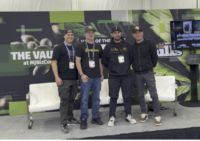 panel discussions examining how breeders and cultivators source, validate, and scale genetics, and why tissue culture is rapidly becoming an essential tool in modern breeding programs, particularly for breeders looking to scale globally.
Picazo opened one conversation by emphasizing that tissue culture remains underutilized in cannabis, despite being standard practice in other agricultural industries where it is foundational to professional breeding and propagation. Panelist Martin Chase of UMAMI Seed Co. expanded on this point, noting that his team has relied on tissue culture since 2014, well before pathogens such as hop latent viroid were widely recognized. Initially, their focus was on cataloging their genetics library, protecting individual cultivars, and minimizing the footprint required for mother plants.
Contaminated Clones Unknowingly Flood the Market
As legal cannabis markets expanded around 2016, many new operators sourced clones from established legal or legacy markets, often without comprehensive pathogen testing. Infected plant material circulated unknowingly for years before cultivators realized that viroids, viruses, and other systemic pathogens were the root cause of widespread crop failures. Powdery mildew, viruses, and viroids traveled easily through shared genetics, exposing a major vulnerability in the industry’s early supply chains.
As outbreaks intensified, breeders and cultivators recognized that pest management practices were no longer enough. The need to prevent disease at the genetic level became apparent, prompting commercial operators to adopt tissue culture to establish truly clean mother plants.
Nodal vs. Meristem Culture: Choosing the Right Tool for the Job
According to Chase, not all tissue culture methods serve the same purpose. As pathogens became more prevalent, his team began cleaning up the genetics using increasingly precise tissue-culture techniques, starting with meristem culture. This method involves dissecting a plant down to a tiny cluster of undifferentiated cells roughly one millimeter in size. Because most viruses and viroids do not typically reach this cellular level, meristem culture offers the highest likelihood of producing pathogen-free plants. However, Chase noted that in extreme cases, where infections are deeply embedded, even meristem culture may not fully eliminate disease.
For less intensive needs, nodal tissue culture offers a faster and more cost-effective option. Nodal culture is essentially micropropagation, producing tiny clones from existing vascular tissue. While this approach can help standardize production runs and reduce surface-level contamination, it does not fully reset a plant’s genetic health. Because vascular tissue can still harbor pathogens and endophytic microbes, nodal culture is better suited to maintaining clean cultivars than to rehabilitating compromised ones.
Breeding projects, foundational grandmother stock, or heavily infected plants are best addressed through meristem culture. For stable, repeatedly tested cultivars, nodal culture can support scalable production, provided operators are prepared to restart the process if contamination reappears.
Resetting Declining Genetics
Beyond disease prevention, tissue culture plays a critical role in preserving and reviving older cannabis genetics that remain commercially or culturally valuable.
Cannabis is an annual plant, not a perennial. Under natural conditions, plants complete their life cycle, produce seeds, and die. In commercial cultivation, however, elite genetics are cloned and maintained indefinitely, an unnatural process that can lead to gradual degradation over time. Aging mother plants often weaken, lose vigor, or exhibit subtle performance changes that growers may mistakenly attribute to environmental conditions or nutrient programs.
Chase noted that long-term cloning can result in genetic drift, accumulated mutations, and physiological stress, causing cultivars to behave differently under new lighting systems, feeding schedules, or production models. Tissue culture, and specifically meristem culture, offers a way to reset that decline. By regenerating a plant from a tiny cluster of undifferentiated cells, cultivators can effectively return a cultivar to its original baseline, similar to starting again from seed, but without losing the genetic identity that made the plant valuable in the first place.
Scalability and Cost Effectiveness
According to Chase, tissue culture offers one of the most powerful advantages for exponential growth. One container becomes two, then four, then eight, and so on. This process dramatically reduces the space required for nursery production. Operators can eliminate 75 to 80 percent of traditional mother space, stack thousands of plants within a very small footprint, and use the same environmental controls already in place. For large-scale operations, this efficiency translates directly into cost savings, operational consistency, and faster expansion.
The Path to Global Distribution
As the cannabis industry matures, tissue culture is becoming essential for preventing large-scale pathogen spread. Panelist John Bayes of Green Bodhi emphasized that when genetics is distributed at scale, especially across borders, consistency and cleanliness are non-negotiable. Backing up genetics at the meristem level ensures plant material is uniform, clean, and suitable for international movement, an approach long used across global agriculture.
Chase expanded on how tissue culture enables compliant global distribution. With tissue culture labs operating in Canada, Austria, Germany, and Australia, his team is able to move phytosanitary-certified plant material around the world with relative ease. Because tissue culture plants are shipped in sterile, sealed vessels without growing media, they can bypass many traditional import and export barriers while still meeting quarantine and regulatory requirements.
Unlike seeds, these shipments often include live explants. Once received, facilities with basic lab infrastructure and trained technicians can rapidly scale production. By rooting plants outside the lab environment, operators can quickly transition tissue culture material into plugs that behave like conventional clones, significantly shortening production timelines. While the process requires technical expertise, it allows growers to start with genetically uniform, pathogen-free plants that can be scaled efficiently across diverse environments.
Picazo emphasized that this level of scalability is only possible because of the work done on the front end. By dissecting plants down to meristem tissue and validating cleanliness through multiple stages of testing, breeders can ensure genetic integrity before material ever enters the global supply chain. In an increasingly international cannabis market, tissue culture is emerging as the most reliable pathway for scaling genetics uniformly while reducing the risk of widespread pathogen outbreaks.
Despite this progress, the cannabis industry is still only scratching the surface of what tissue culture can offer when compared to advances made in other agricultural sectors. Not every plant responds the same way in tissue culture, and techniques that work for bananas do not automatically translate to cannabis, hemp, or hops. Even so, tissue culture is emerging as a critical tool in the modern cultivation toolbox, helping breeders and cultivators push genetics, consistency, and scalability to the next level.
Copyright
© Cannabis Industry Journal